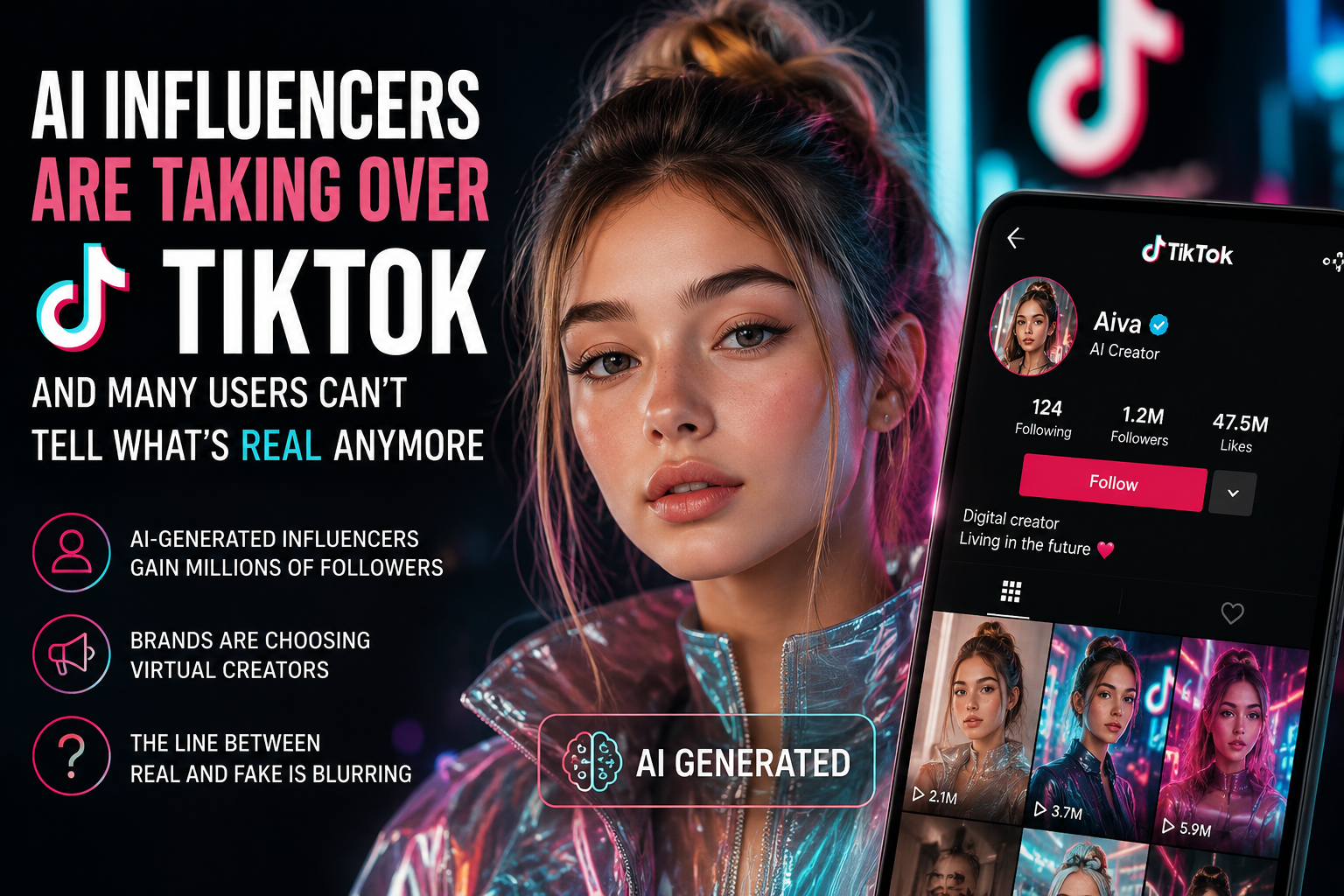
Artificial intelligence is rapidly changing the world of social media, and TikTok is now at the center of a growing trend involving AI-generated influencers. These virtual creators, designed using advanced artificial intelligence tools, are gaining millions of views and followers while promoting fashion, beauty products, music, and lifestyle content just like real influencers.
Many of these AI personalities look extremely realistic, making it difficult for users to distinguish between human creators and computer-generated avatars. Some accounts openly admit they are AI-generated, while others leave viewers guessing. Experts say this new wave of “virtual influencers” is transforming the creator economy and attracting major brands interested in controlled, always-available digital ambassadors.
The trend has sparked debate online. Supporters believe AI influencers represent the future of entertainment and digital marketing, offering endless creative possibilities without the controversies sometimes associated with real celebrities. However, critics argue that these virtual personalities may contribute to unrealistic beauty standards, misinformation, and the loss of authentic human connection on social media.
TikTok’s growing use of AI-powered tools and algorithm-driven content recommendations has also helped these accounts spread quickly across users’ feeds. According to marketing analysts, brands are increasingly exploring AI-generated creators because they can produce content around the clock and adapt easily to online trends.
As artificial intelligence continues evolving, experts believe social media users may soon enter an era where distinguishing between real and virtual influencers becomes even harder — raising important questions about trust, transparency, and the future of online culture.