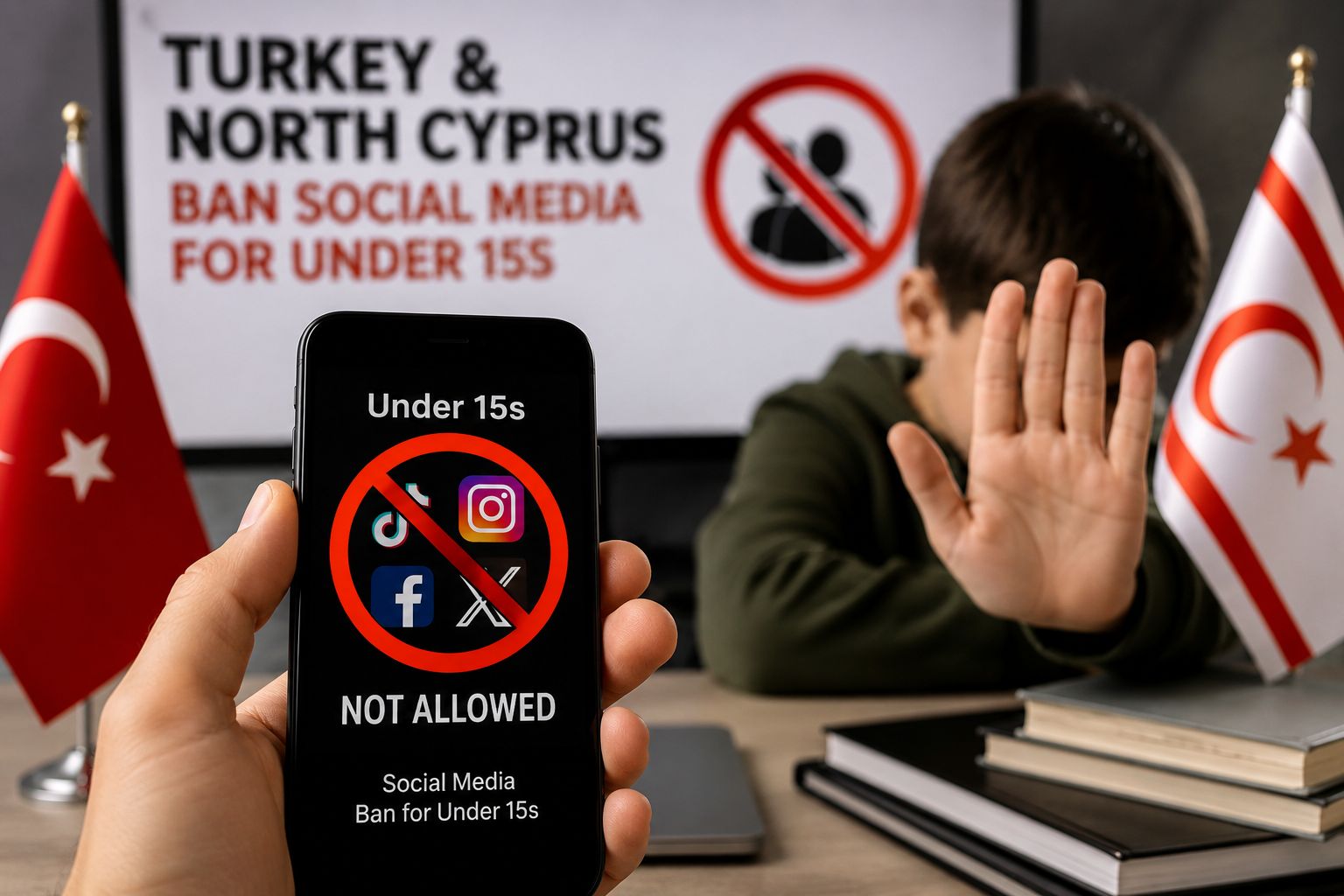
A growing debate over children’s online safety is reshaping digital policies across the region, as both Turkey and Cyprus move toward restricting social media access for users under the age of 15.
Turkish lawmakers recently approved legislation aimed at preventing children younger than 15 from using major social media platforms. The law would require companies such as Instagram, TikTok, X, and Facebook to introduce stronger age-verification systems and parental control tools. Officials say the goal is to protect children from harmful content, cyberbullying, online addiction, and privacy risks.
Meanwhile, Cyprus has also announced plans to tighten rules surrounding children’s use of social media. Government officials described the move as part of a broader European effort to create safer digital environments for minors.
Supporters of the new measures argue that young users are increasingly exposed to dangerous trends, misinformation, and mental health pressures online. They believe stricter rules could help parents regain control over children’s screen time and digital habits.
However, critics warn that outright bans may create new concerns related to freedom of expression, privacy, and digital rights. Some experts argue that education and parental guidance may be more effective than strict restrictions, while others question how governments and platforms will realistically enforce age verification.
The debate reflects a wider global trend, with several countries around the world considering similar restrictions for minors on social media platforms. As governments continue to balance child protection with digital freedom, the future of online access for younger generations remains one of the most controversial technology issues of 2026.