
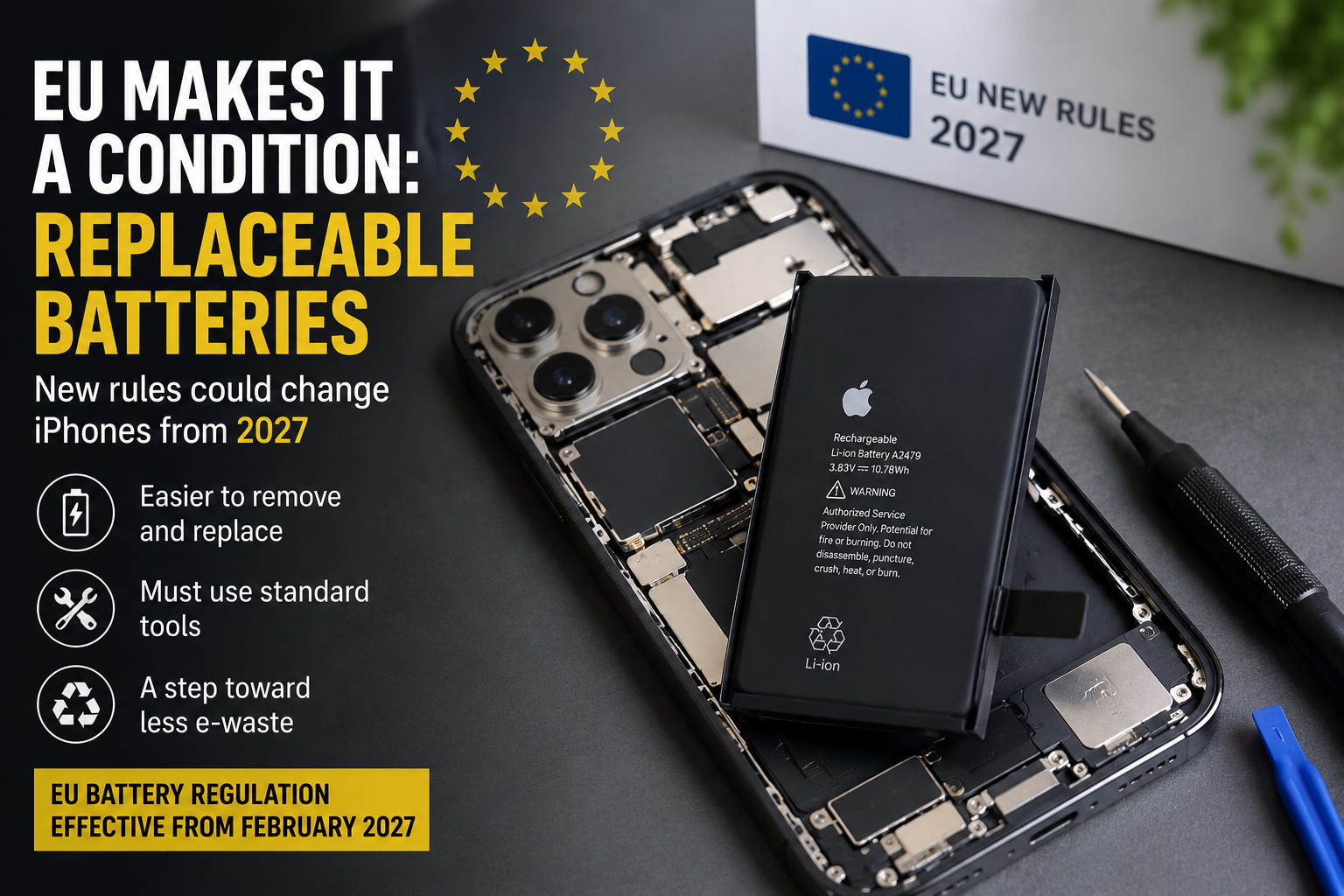
The European Union is preparing to introduce major new regulations that could change the future design of smartphones, including Apple’s iPhone lineup. Under new EU battery laws expected to take effect in February 2027, smartphones and tablets sold in Europe must feature batteries that are easier for users to remove and replace.
The regulation is part of Europe’s growing “right to repair” movement, which aims to reduce electronic waste and extend the lifespan of consumer devices. Officials say manufacturers will no longer be allowed to heavily seal batteries inside devices using strong adhesives or difficult repair methods. Instead, batteries must be removable using commonly available tools without damaging the phone.
The new rules are expected to impact major tech companies including Apple, Samsung Electronics, and other smartphone manufacturers. Experts believe the law could force companies to rethink the ultra-thin sealed designs that have dominated the smartphone industry for years.
However, reports suggest Apple may partially avoid drastic changes if its batteries continue meeting EU durability standards. Devices capable of maintaining at least 80% battery capacity after 1,000 charging cycles may qualify for exemptions under parts of the regulation. Recent iPhone models reportedly already meet these requirements.
The EU says the regulation will benefit consumers by making repairs cheaper and devices longer-lasting while reducing environmental damage caused by electronic waste. The legislation follows previous EU policies that pushed Apple to adopt USB-C charging ports on newer iPhones.




