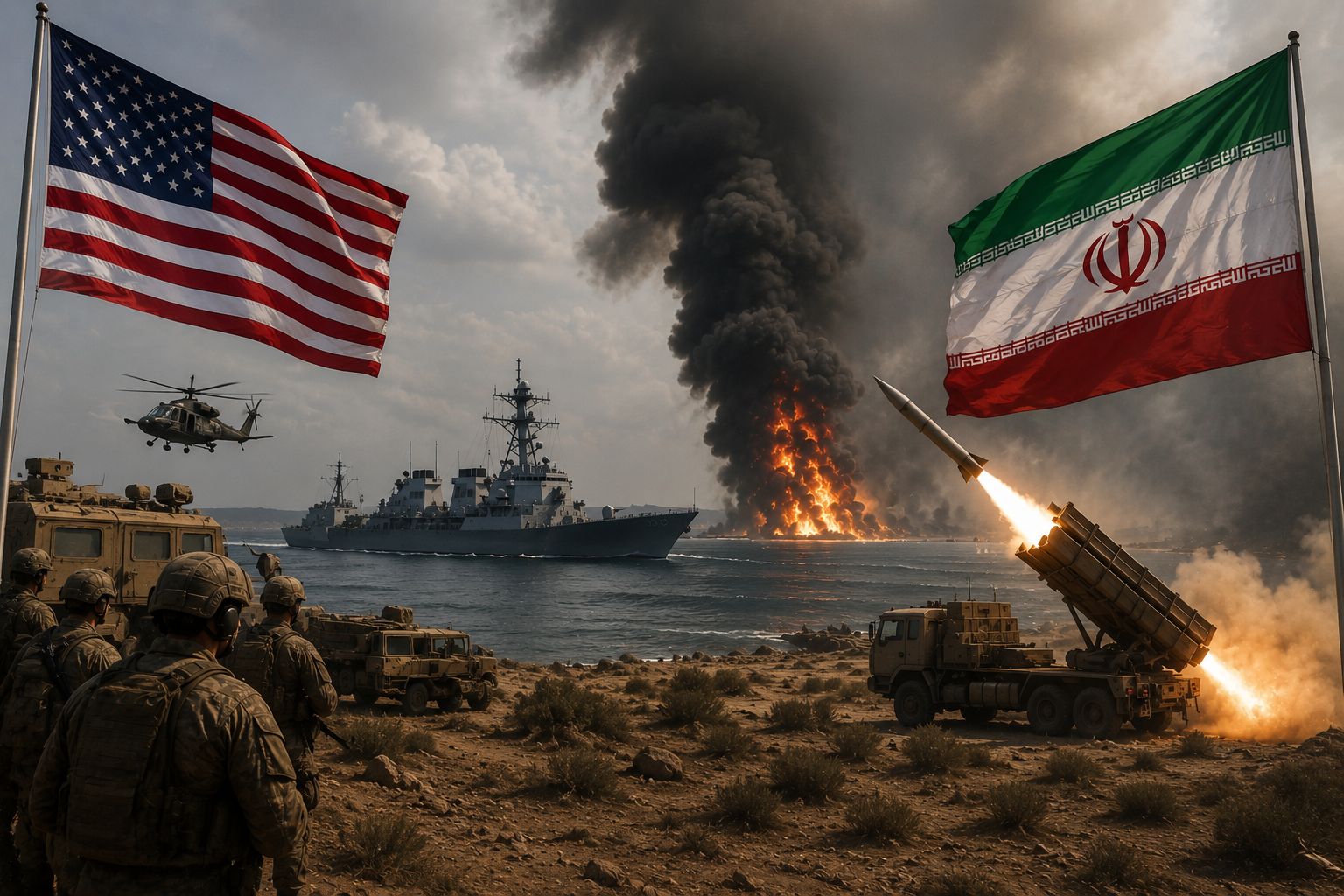
Tensions between the United States and Iran escalated again this week after new military clashes near the Strait of Hormuz threatened to collapse the fragile ceasefire between the two countries.
According to international reports, both sides exchanged strikes in and around the strategic Gulf region after Iran accused the United States of targeting ships and coastal areas near Iranian territory. U.S. officials, however, stated that American forces acted in self-defense after Iranian attacks targeted U.S. naval destroyers operating in the area.
The latest developments come as negotiations aimed at ending the conflict continue facing major obstacles. Former U.S. President Donald Trump reportedly rejected Iran’s latest peace proposal, describing the ceasefire as being “on life support” amid growing disagreements over Iran’s nuclear program and control of shipping routes in the Strait of Hormuz.
The ongoing tensions have already affected global oil markets, with oil prices rising sharply due to fears of supply disruptions in one of the world’s most important energy transit regions. Analysts warn that any further escalation could lead to wider economic consequences worldwide.
Meanwhile, governments across the Middle East remain on high alert as regional powers continue diplomatic efforts to prevent the conflict from expanding further. International observers fear that additional clashes could destabilize the Gulf region and threaten global trade routes if negotiations fail in the coming days.