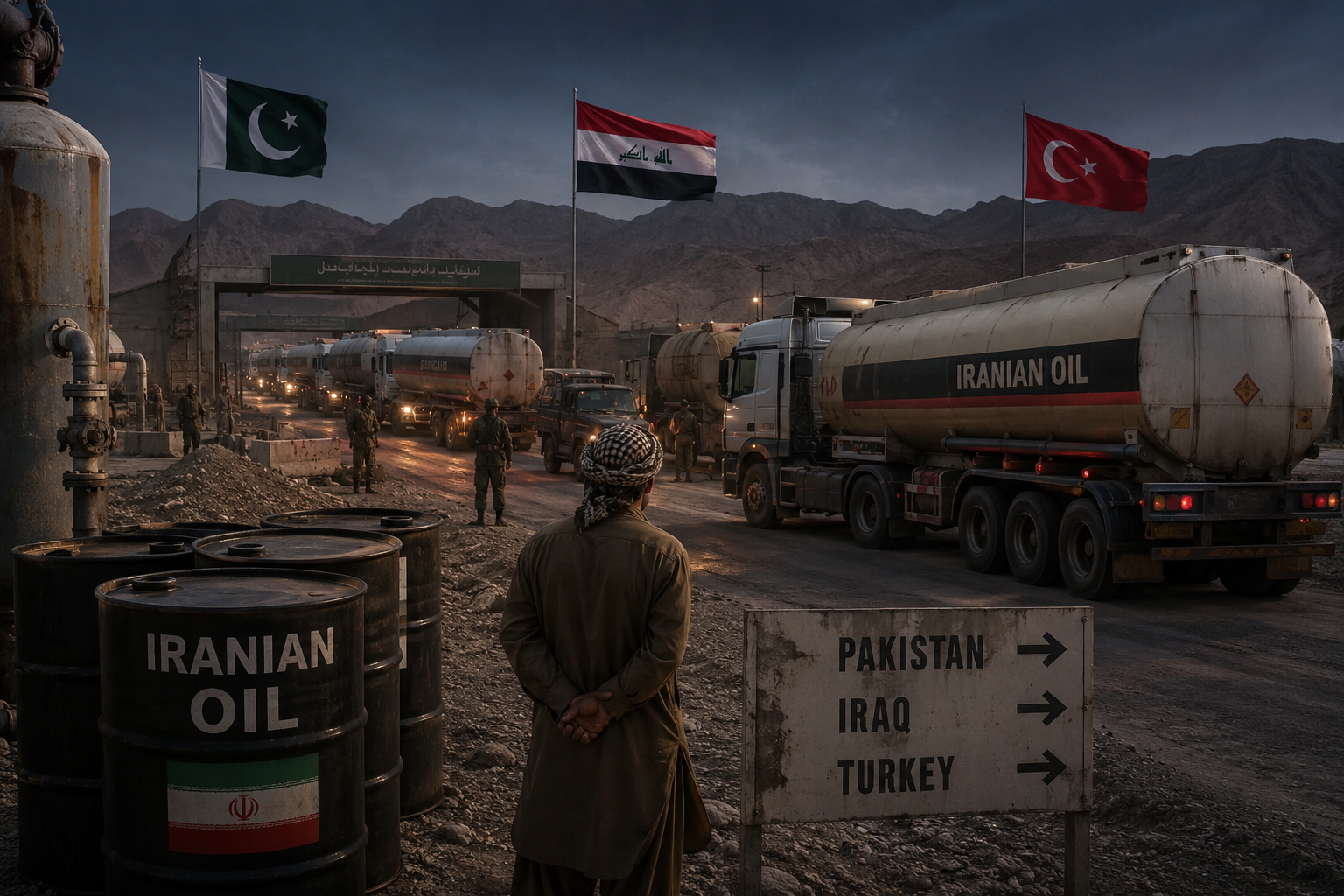
As tensions continue to rise across the Middle East, new reports suggest Iran is increasingly relying on unofficial oil and fuel routes through neighboring countries including Pakistan, Iraq, and Turkey to maintain energy exports and bypass growing restrictions.
Recent investigations and regional analyses indicate that Iranian fuel trafficking into Pakistan has significantly increased in recent months. According to reports from Radio Free Europe/Radio Liberty, millions of liters of Iranian fuel are believed to enter Pakistan daily through informal border crossings and maritime routes near Gwadar.
Meanwhile, Reuters previously revealed the existence of large-scale “off-the-books” oil transportation from Iraq’s Kurdistan region into Iran and Turkey. The report described hundreds of tanker trucks moving oil daily through unofficial channels following disruptions to official export pipelines.
Analysts say the growing reliance on alternative routes comes as Iran faces increasing pressure on traditional oil shipping lanes, especially around the Strait of Hormuz — one of the world’s most critical energy corridors. Reuters recently reported that Iran has been selectively managing shipping access and forming energy-related arrangements involving Iraq and Pakistan amid the ongoing regional crisis.
Additional reports claim Iran has expanded land-based trade routes through Pakistan and Turkey while also using rail and Caspian Sea connections to continue exports despite sanctions and maritime restrictions.
Although no official “secret alliance” between the countries has been confirmed, experts believe the increase in unofficial fuel movement highlights how regional energy networks are rapidly shifting under geopolitical pressure.
The developments have also fueled international concerns over sanctions evasion, shadow tanker operations, and the long-term stability of global oil markets as the Middle East faces one of its most uncertain periods in recent years.